
What Would It Take?
Changing spiritual landscapes


What would it take to change the spiritual landscape of your town, city, region, country, or the world? To truly transform it? To see neighborhoods awakened, families restored, and every hidden corner filled with the presence of Jesus?
What would it take to shift the spiritual atmosphere of a city—or even a nation?
These aren’t just rhetorical questions. They’re sacred prompts. Soul-stirrings. They’re meant to awaken something deep in you—because if you’re reading this, chances are you already feel it:
The Church was made for more.
You were made for more.
Is It Someone Else’s Job?
In an age full of podcasts, conferences, and online influencers, it’s easy to assume someone else is responsible. The megachurch. The denomination. The celebrity pastor. The next generation.
But what if the invitation is for you? What if God has positioned you uniquely—in your city, your context, your circle—for such a time as this?
What if you’re not just in the Church… but part of its renewal?
The Church as Jesus Intended
Somewhere along the way, we may have tamed the Church. Fit it into staff org charts and strategic plans. We’ve measured success by attendance and budgets. We’ve drifted from multiplication into maintenance.
But what if the Church is far more movemental, relational, and collaborative than we’ve dared to believe?
The Church we glimpse in Acts and the epistles was nothing like a static institution. It was a network of Spirit-empowered leaders, house churches, communities, and apostles—multiplying the life of Jesus from Jerusalem to Antioch to Rome.
They didn’t add churches.
They multiplied them.
Through relationships. Through risk. Through obedience.
Today, we have structures, platforms, and programs. But do we have movements?
If we want to see Gospel-saturation in our generation, we must rediscover the power of networks—not just as a strategy, but as a Spirit-led response to the mission of Jesus.
When Leaders Long for More
I have met with hundreds of church leaders who carry a holy discontent. They’re not tired of the mission—they’re tired of the model.
They believe the harvest is plentiful. They sense that multiplication is possible. But they feel stuck in systems that prioritize keeping people rather than sending them.
Maybe that’s you. Maybe you’re asking:
“Isn’t there a better way?”
We believe there is.
That’s why the Reproducing Networks Catalyst was created—not as a program, but as a pathway. A way to help leaders like you start networks of churches that multiply disciples and reproduce leaders in sustainable, contextual, and relationally rich ways.
The Partial Calling Must End
Far too many leaders have been trained to live out a partial calling.
We’ve asked them to care for the flock, but not commission pioneers.
We’ve coached them to grow attendance, but not release apostles.
We’ve taught them to protect, but not send.
But the call of Jesus is more. You’re not just called to manage a church—you’re called to multiply the Kingdom.
“Entrust to reliable people who will also be qualified to teach others.” — 2 Timothy 2:2
You’re called to live into the Great Collaboration—Jesus’ prayer in John 17 that we would be one, so that the world would believe.
You’re called to be a steward, not an owner. A sender, not just a shepherd.
What’s Missing in Our Ecclesiology?
Here’s a tension many are now naming: the modern church often defaults to modalic forms—gathered, pastoral, centered on Sundays.
These are good. But they’re not enough.
The New Testament gives us sodal models —mobile, apostolic, multiplying. The Church was meant to live in both rhythms—modalic and sodalic. Gathered and scattered. Shepherding and sending.
Networks are how we recover the sodalic spirit.
They empower collaboration without control.
They foster contextualization without compromise.
They accelerate multiplication without burnout.
And they offer a framework for churches to multiply not just services, but leaders, teams, and new churches.
A Fresh Commitment to the Movement
Let’s make it simple. If you want to live as part of the Jesus movement today, here are five courageous steps to consider:
Understand the scope of the mission: Jesus is after every person, in every place.
Name the barriers: Comfort, fear, control, fragmentation, and small vision can all hold us back.
Clarify your role: You are not called to maintain; you are called to multiply.
Embrace sacrifice: Movements come at a cost. But they’re worth it.
Live as a steward: You don’t own the Church. Jesus does.
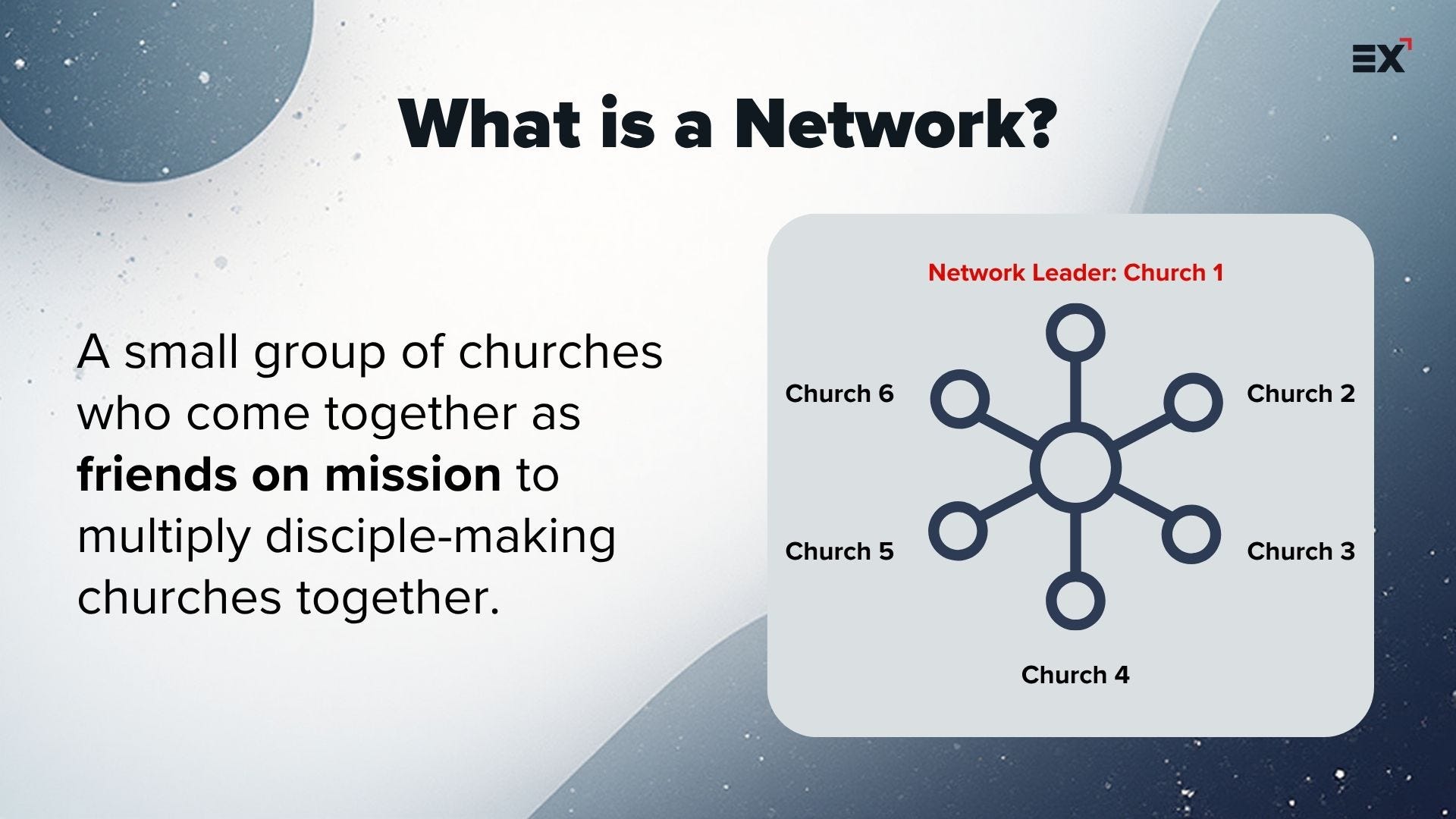
Start or join a network: You were never meant to do this alone.
Unity Is the Strategy
In John 17, Jesus didn’t just pray for unity as a side note. He said it was the strategy by which the world would know Him.
“Then the world will know that you sent me…” (John 17:23)
That’s what networks can become—a living answer to Jesus’ prayer.
When churches collaborate—not compete—around disciple-making, leader development, and church planting, the Kingdom advances in visible, beautiful, compelling ways.
We don’t just grow churches.
We multiply the Gospel.
We don’t just fill buildings.
We saturate cities.
And we do it together.
So… What Would It Take?
Let’s conclude by discussing you and your context. What would it take to see your city transformed? What would it take for a multiplying, missional movement to emerge in your region? What would it take to fully embrace your calling—not just as a pastor or planter, but as a movement leader?
Let’s discover what’s possible. But let’s do it—together.